



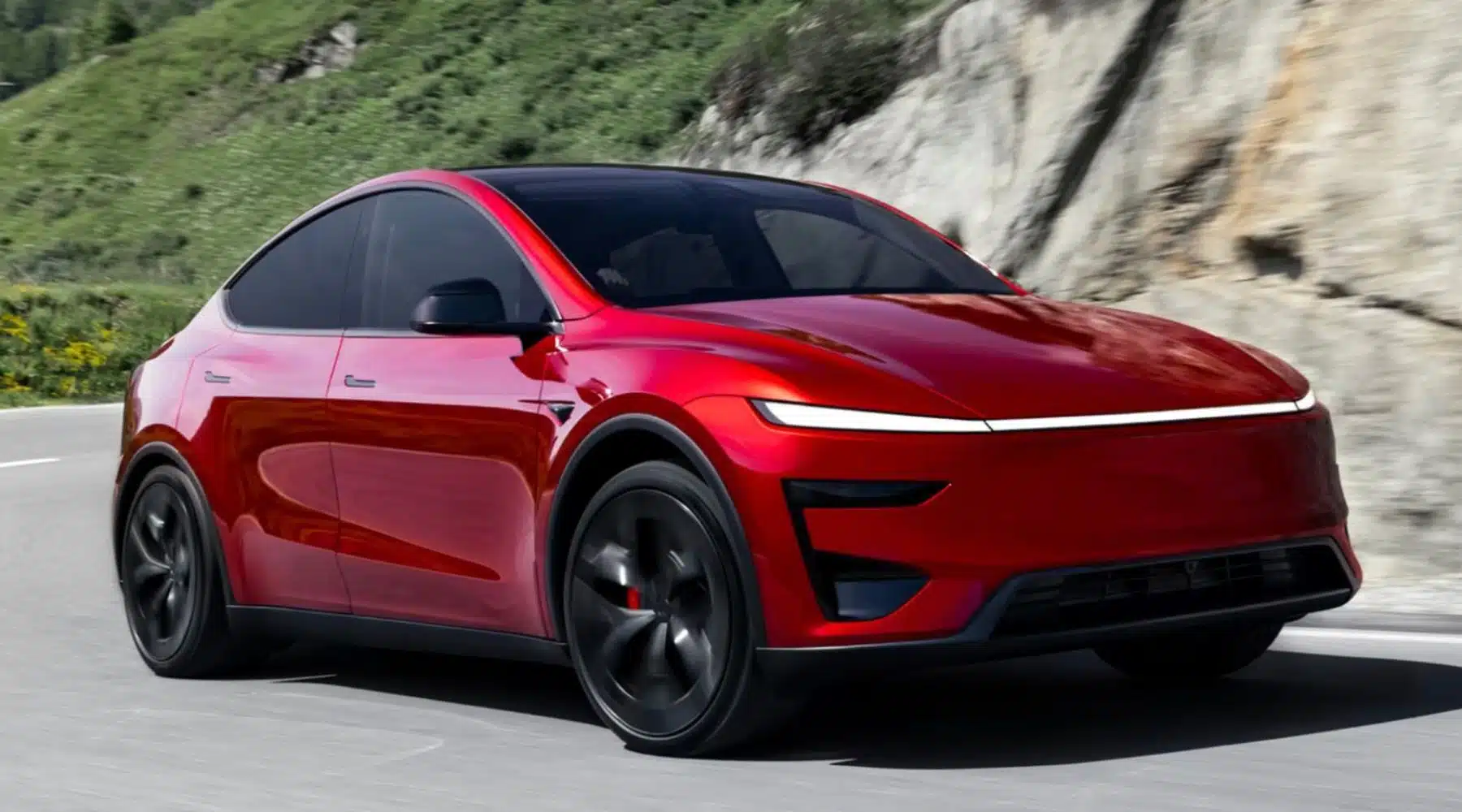
EV car loan interest rates









Rates correct as of September 2026. Quotes based on a $30,000, five-year car loan for a borrower with good credit.
How is an EV car loan different from standard vehicle finance?
A car loan for an EV is commonly known as a green car loan, which is structured the same way as a regular car loan. You're approved for a lump sum and repay it weekly, fortnightly or monthly over one to seven years.
The differences come down to the car you're buying and the rate you'll get. A green car loan is only available for vehicles your lender classes as green, and in return the rate is lower by as much as 0.50% p.a. to 1.50% p.a. Some lenders also reduce or waive fees.
What counts as green varies between lenders, but it can include:
- Electric vehicles (cars powered by a battery alone)
- PHEVs (plug-in hybrid electric vehicles that pair a battery with a petrol engine)
- Hybrids (petrol cars with a battery that charges as you drive)
- Low-emission petrol vehicles (fuel-efficient cars that sit under a lender's emissions limit)
How do I know if my car qualifies for a green car loan?
There's no national definition of a green car, so each lender sets its own rules. Most look at three things:
- Vehicle type: some lend only for EVs and PHEVs, while others include conventional hybrids and fuel-efficient ICE vehicles
- Emissions: a cap on grams of carbon dioxide (CO₂) per kilometre, often checked against the Government's Green Vehicle Guide
- Age: some lenders only finance new or demo models, while others accept used cars up to a set age
Here are some real-life examples of lending criteria that apply to green car loans from our lending panel:
- Firstmac: new or demo vehicles and EVs are the most likely to qualify
- Pepper Money: new, demo or used EVs up to $300,000
- Plenti: available for new EVs priced up to $90,000
- Resimac: EVs are the only car type eligible for rate discount
- Wisr: electric and hybrid vehicles accepted
When you apply through Savvy, your finance broker checks which lenders your car qualifies with to help deliver you the best available deal.
Luxury car tax discounts
Another difference is the luxury car tax (LCT) threshold. LCT is 33% of the amount a car's value sits above the threshold, which is lower for fuel-efficient cars. For 2026-27, it's $91,661 for fuel-efficient vehicles and $80,809 for other cars.
A fuel-efficient car has a combined fuel consumption of 3.5L per 100km or less. That limit was 7.0 litres before 1 July 2025, so some hybrids that once qualified will miss out now. The formula for the LCT payable is:
(LCT value – LCT threshold) × 10 ÷ 11 × 33%
The following table shows the difference the threshold makes for a $90,000 car:
| Car type | Purchase price | LCT threshold | LCT payable | Total cost |
|---|---|---|---|---|
| Petrol | $90,000 | $80,809 | $2,757 | $92,757 |
| Electric | $90,000 | $91,661 | $0 | $90,000 |
| Figures are illustrative, include GST and exclude on-road costs. Thresholds correct for 2026-27 financial year. | ||||
Tax rules depend on your circumstances, so check with an accountant before you buy.

Green not always green enough for lenders
"The biggest mistake we see people make is falling in love with an EV or hybrid before checking if it actually qualifies for a discounted green rate. Every lender defines 'green' differently, so it pays to check before you commit to a specific model."
How much can I save with an EV car loan?
The rate discount on an EV car loan can make a meaningful difference to the amount you’ll pay overall. Across the 2025-26 financial year, the average EV buyer through Savvy borrowed $48,902, more than $11,500 above the $37,346 borrowed by the average ICE car buyer, yet paid $1,255 less interest over five years.
That’s because the average EV loan settled at 9.04% p.a., against 12.72% p.a. for ICE vehicles. Borrower profile, such as income and property ownership, and the higher proportion of brand-new EVs play a part in that gap too, but the discount shouldn’t be slept on.
Even a small rate difference adds up over the life of a loan. The table below shows how a discount affects the cost of a $50,000, five-year loan:
| Type of car loan | Interest rate | Monthly repayment | Total interest | Total saving |
|---|---|---|---|---|
| Standard car loan | 8.00% p.a. | $1,014 | $10,829 | N/A |
| Green car loan #1 | 7.50% p.a. | $1,002 | $10,114 | $715 |
| Green car loan #2 | 7.00% p.a. | $990 | $9,404 | $1,425 |
| Green car loan #3 | 6.50% p.a. | $978 | $8,698 | $2,131 |
| Calculations based on a $50,000, five-year car loan. Interest rates are for illustrative purposes only and don’t necessarily reflect the rate you’ll receive on your car loan. | ||||
As you can see, a 1.50% p.a. discount on a $50,000 EV can save you more than $2,100 in interest alone in this instance. That’s even before accounting for fee reductions or waivers, which are also common, that’ll bump up your savings even further.
EV car loans vs novated leases
Another popular finance option for electric vehicles is novated leasing. It’s a salary sacrificing arrangement whereby you pay for your car and lease expenses from your pre-tax income, which reduces your payable income tax.
A novated lease can offer significant tax savings, particularly for EVs that qualify for a fringe benefits tax (FBT) exemption under the LCT threshold. This can lower your overall vehicle costs even further. You can see how the two finance types compare for some of the best EV models in Australia:
Tesla Model Y RWD

| Finance type | Purchase price | Interest rate | Weekly payment | Total cost over five years (inc. on-road) |
|---|---|---|---|---|
| Car loan | $58,900 | 6.49% p.a. | $265 (post-tax) | $94,009 |
| Novated lease | $58,900 | 8.25% p.a. | $219 (pre-tax) | $56,813 |
|
Car loan Novated lease |
|
$58,900 $58,900 |
|
6.49% p.a. 8.25% p.a. |
|
$265 (post-tax) $219 (pre-tax) |
|
$94,009 $56,813 |
BYD Sealion 7 Premium

| Finance type | Purchase price | Interest rate | Weekly payment | Total cost over five years (inc. on-road) |
|---|---|---|---|---|
| Car loan | $54,990 | 6.49% p.a. | $248 (post-tax) | $89,428 |
| Novated lease | $54,990 | 8.25% p.a. | $209 (pre-tax) | $54,392 |
|
Car loan Novated lease |
|
$54,990 $54,990 |
|
6.49% p.a. 8.25% p.a. |
|
$248 (post-tax) $209 (pre-tax) |
|
$89,428 $54,392 |
Geely EX5 Complete

| Finance type | Purchase price | Interest rate | Weekly payment | Total cost over five years (inc. on-road) |
|---|---|---|---|---|
| Car loan | $40,990 | 6.49% p.a. | $185 (post-tax) | $73,025 |
| Novated lease | $40,990 | 8.25% p.a. | $176 (pre-tax) | $45,726 |
|
Car loan Novated lease |
|
$40,990 $40,990 |
|
6.49% p.a. 8.25% p.a. |
|
$185 (post-tax) $176 (pre-tax) |
|
$73,025 $45,726 |
Jaecoo J5 EV Summit

| Finance type | Purchase price | Interest rate | Weekly payment | Total cost over five years (inc. on-road) |
|---|---|---|---|---|
| Car loan | $35,990 | 6.49% p.a. | $162 (post-tax) | $67,167 |
| Novated lease | $35,990 | 8.25% p.a. | $164 (pre-tax) | $42,631 |
|
Car loan Novated lease |
|
$35,990 $35,990 |
|
6.49% p.a. 8.25% p.a. |
|
$162 (post-tax) $164 (pre-tax) |
|
$67,167 $42,631 |
Model prices sourced from CarsGuide and are correct as of September 2026. Prices do not include on-road costs or other expenses related to the car purchase process. Calculations are for illustrative purposes only and aren’t necessarily reflective of the car loan or novated lease rate or terms you’ll receive. Total cost calculations include an annual running cost of $5,000. Car loan interest rate based on lowest available rate through Savvy as of September 2026. Novated lease calculations based on a $100,000 salary and a car driven between 10,000km and 15,000km per year. Overall novated lease cost calculations are inclusive of tax savings. They do not take into account personal factors, additional income, deductible benefits, personal vs business use ratios and credit suitability.

Novated lease customers on the clock
"Many people focus on getting the lowest interest rate, but that's only half the story. A loan with fewer fees, flexible repayment options or no early exit penalties can often save you more in the long run. Don't just ask 'what's the rate?'; find out what the total cost of the car loan will be over its life."
The pros and cons of green car loans
Pros
-
Discount on interest rate and fees
The main benefit of EV car finance is the discount available to vehicle buyers, which comes in the form of lower rates and reduced or waived fees.
-
Same loan structure as standard car loans
This is the same product as a car loan, meaning there aren’t any major structural differences you’ll need to wrap your head around.
-
Reduce your carbon footprint
By purchasing an electric or hybrid vehicle, you can be safe in the knowledge that you're helping reduce emissions in Australia.
Cons
-
Criteria differ between lenders
What constitutes a green car can vary between lenders, so it’s important to double-check before you apply. When you go through Savvy, we’ll handle this for you.
-
Fewer options available for used green cars
Because EVs and PHEVs are still relatively new to the Aussie market, there may be fewer used options available.
-
Not available with all lenders
Finally, there’s the simple fact that not all lenders actually offer discounts for green vehicles. Your options for discounted finance may be limited.
EV and hybrid rebates by state
Depending on where you live in Australia, you may be able to benefit from EV incentives. The following territories currently have schemes in place:
| State | Green car scheme |
|---|---|
| ACT | The ACT offers reduced stamp duty for zero and low-emission vehicles, a discounted registration fee based on tailpipe emissions, and low-interest loans of up to $20,000 at 3.00% p.a. over as long as ten years for eligible buyers under the Sustainable Household Scheme. |
| NT | The Northern Territory offers new and existing EV and PHEV buyers free registration and a stamp duty concession of up to $1,500 (for cars up to $50,000) until 30 June 2027. |
Most green car schemes have now closed across Australia. Here’s what they looked like in these states and territories:
How to apply for an EV car loan with Savvy
-
Apply online
Fill out our simple web form to apply, telling us about your current financial situation and the loan you’re after.
-
Send through your docs
Supply any documents required for profile verification, which you can do easily through our online portal.
-
Get a call from your broker
Once we have all the information, your broker will reach out to chat about the green finance options available to you.
-
Find your ideal car
If you haven’t already found your ideal EV or green car, we can help you source one through our in-house car broker team.
-
Prepared and approved
Your broker will prepare your forms and apply on your behalf. They’ll let you know when it’s approved.
-
Sign on the dotted line
We’ll send you the contracts to sign and, once it’s all settled, the car is yours!
Why apply for a car loan with Savvy?
Why is the Australian Government pushing EV sales?
There are several reasons the Australian Government has offered a range of EV incentives, from the increased luxury car tax (LCT) threshold to the FBT exemption and, more recently, a $60 million partnership with Hyundai Capital Australia to discount interest rates by 0.50% p.a. to 1.00% p.a. on Hyundai and Kia dealer finance.
The biggest reason is that increasing Australia's EV uptake helps the Government reach its target of net zero emissions by 2050. The Climate Change Authority has found that to meet the shorter-term target of cutting emissions by 62% to 70% by 2035, half of all new light vehicle sales need to be electric between now and then. In 2025, that figure sat at just 8.3%, but has jumped to 17.7% (and rising) as of the end of July 2026.
The Government has also legislated the New Vehicle Efficiency Standard (NVES), which sets a fleet-wide emissions limit for new vehicles sold by each manufacturer. Carmakers that exceed the limit face financial penalties, giving them an incentive to sell more low and zero-emission models to offset higher-emitting ones in their range.
The kind of direct finance support offered by the Hyundai partnership is seen as a cheaper way for the Government to encourage EV uptake than the FBT exemption, which blew out in cost from an original projection of $90 million to $1.35 billion in the 2025-26 financial year and is now being wound back from 1 April 2027.
Can I include the cost of charging equipment in my green car loan?
Yes, some lenders will allow you to include the cost of a home charger in your green car loan under certain circumstances. The main situation where this could happen would be when your EV’s charger is listed on the dealership invoice alongside the vehicle. In this case, it can be counted as an accessory and bundled into your car loan.
However, if you’re buying the charger separately or are financing a used EV from a private seller, it’s unlikely that you’ll be able to build the cost into a car loan. You’d have to take out a personal loan to cover both the car and the charger if you wanted to do it this way. It’s important to weigh up whether the extra interest is worth the convenience of having it all covered with one payment.
Most popular electric cars in Australia: 2026
If you’re wondering what EV might be suitable for you and your family, or aren’t sure what vehicles qualify for a green car loan, we’ve compiled a list of the ten most popular cars sold in Australia for each category in the first half of 2026.